


World's Earliest Alzheimer's Test
Non-invasive VR screening to protect a lifetime of memories.



Americans aged 65 and older
has clinical Alzheimer’s dementia.
Alzheimer’s can begin years
before memory changes.
Why timing matters.
 FDA-approved medications can slow Alzheimer’s
Leqembi and Kisunla are FDA-approved medications that target amyloid, a protein that builds up in the brain in Alzheimer’s disease. They can slow decline in memory and thinking in people with early Alzheimer’s. They are not a cure and require a clinician’s assessment of benefits and risks.
 The early stage matters
These medications are used in people with mild cognitive impairment or mild dementia due to Alzheimer’s, after amyloid is confirmed. Timely assessment helps identify who may benefit. Researchers are also studying whether starting medication before symptoms can delay their onset.
 Getting diagnosed can take time
Memory changes often prompt a visit to a clinician, even though Alzheimer’s-related changes may have been developing for years. Reaching a diagnosis and confirming eligibility for medication can require specialist assessment and biomarker testing. Finding accessible ways to assess people earlier is an important research goal.
 The eyes could help us look earlier
Studies have found differences in eye movements in people with mild cognitive impairment and Alzheimer’s. Researchers are investigating whether these measurements can help identify changes earlier. Retinal imaging is another area of ocular-biomarker research; it measures different features from eye tracking.

Meet Saccade.
See what the eyes are saying.
Through a new lens.
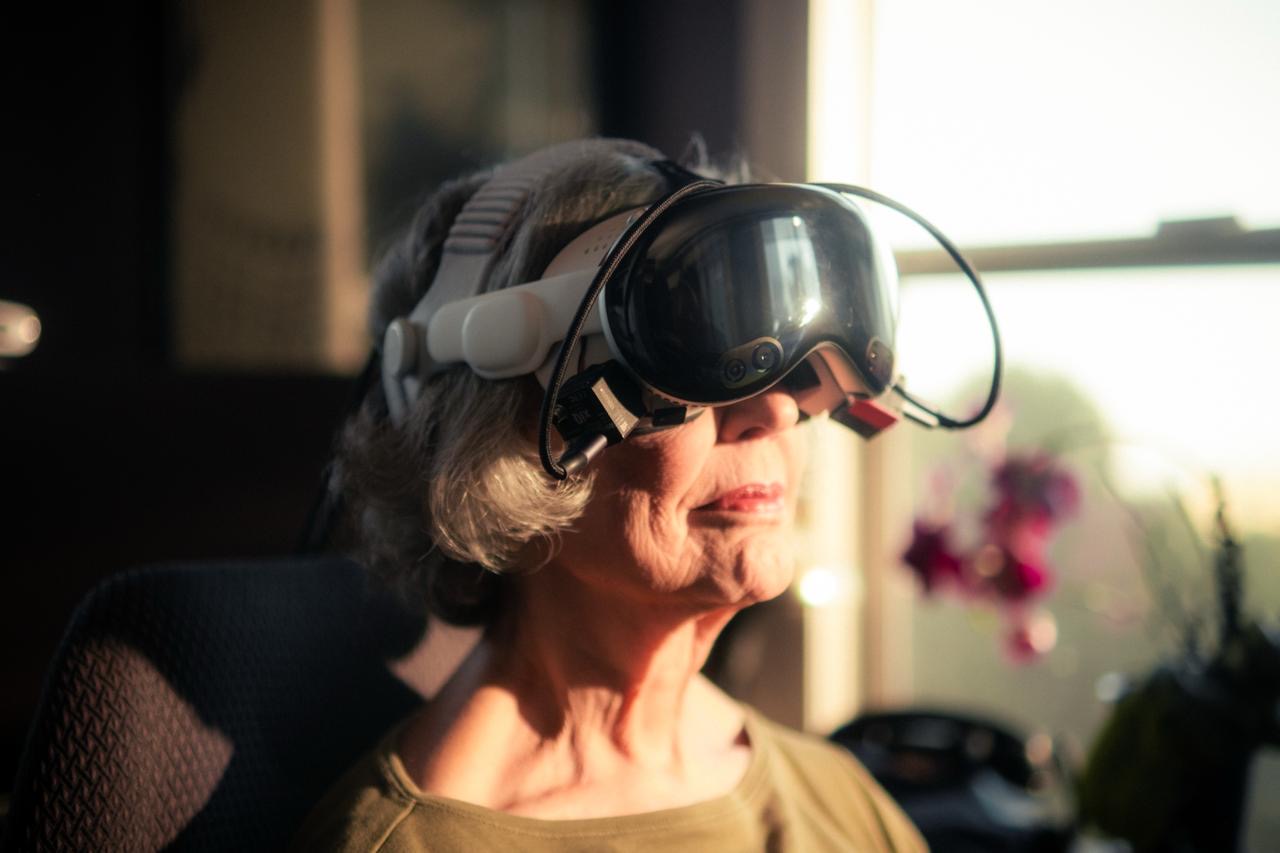
You complete simple visual tasks in VR. Saccade analyzes your eye movements to help identify signs linked to Alzheimer’s.
Your assessment



Before your visit
Book at a clinic near you and complete the health survey. Bring relevant medical records and a current medication list. Tell staff about your glasses or contact lenses, eye conditions, and any changes in your vision.
Fit the headset
Staff fit the headset and check calibration before starting the tasks. The headset displays visual prompts while separate infrared cameras record your eye movements. Tell staff if the fit feels uncomfortable or the dots are difficult to see.
Follow the visual prompts
Staff guide you through five tasks: hold your gaze, look toward a dot, look in the opposite direction of the dot, respond as the centre dot changes, and follow a moving dot. Rest between tasks or stop at any point.
Review your results
Staff check completed tasks and recording quality. Blinks, tracking loss, or interruptions may mean repeating a task. Your clinician reviews the measurements alongside your health history and clinical assessments. Ask when feedback will be available and what it will include.
Plan your care and follow-up
Your care team automatically arranges follow-up through one of three pathways: longevity, combined longevity and neurology, or neurology. Your plan incorporates your health history, clinical assessments, and eye-movement results, with repeat visits to track changes over time.
Questions
How do I book a test?
Leave your contact details and Saccade will contact you when an appointment is available.
What happens during the test?
You wear a headset and follow visual prompts while cameras record your eye movements. Staff guide you throughout.
Can I wear glasses or contact lenses?
Tell staff about your glasses, contact lenses and any eye conditions before you begin. They’ll check the setup with you.
Can I take a break?
Yes. You can pause or stop at any time. Let staff know if the headset feels uncomfortable.
How long should I allow?
Ask your clinic how long to allow for the full visit, including setup and breaks.
What happens after the test?
Your clinic explains when feedback will be available and discusses any recommended follow-up.
What will my results tell me?
They describe the timing, accuracy and control of your eye movements. They do not confirm or rule out Alzheimer’s.

Request an Appointment
Leave your contact details and Saccade will contact you when an appointment is available for you to take a test. No deposit is required.
